
A couple of months later, with our degrees in hand, one in Computer Science and the other in Professional Media, we headed down to London to attend a Computer Show, wishing to see Rare.
Here the dreams would surely come true! I met a Lead Dev, and to say it didn’t go well was a mild understatement. He mocked my research project:
If we ever need to write games for the blind, we’ll be in touch!
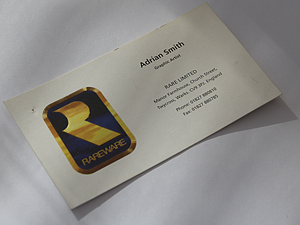
My girlfriend didn’t do any better on the graphics side. The CVs posted of the Rare cubicle walls were works of art in themselves. We had seriously underestimated Rare, they were only taking the cream from the industry. Not only was it a realisation that I wasn’t going to work for Rare, I suddenly realised it was going to be tough to get in to any game studio…
So I was stopped.
It didn’t really matter how good a coder you were, it was more about proving game ideas. In my case, my only two pieces of game code were a complete re-write of Dyna Blaster (Bomberman) for the Amiga and, the other, an enhancement of an already existing Spectrum game. Whilst I thought that these showed I could code games, it actually didn’t, a small subtlety I had completely missed.
It was now much too late to rectify the situation. When I started coding, games could still be written by one or two people, e.g. the Stampers, but by the time of my chat with Rare games, most were made by large studio teams, such as Rare itself.
Secondly there was no suitable games platform; the Sinclair Spectrum, Commodore64, Commodore Amiga, Atari ST were all dead and the consoles had become king. But consoles of that era prevented mainstream homebrew coding. And the PC was dull and expensive…
To rub salt into the wounds, Rare only went and released a whole set of Nintendo64 gaming perfection: Banjo-Kazooie, (my girlfriends favourite), GoldenEye, JetForce Gemini (my favourite) and, of course, Perfect Dark.
Rare could do no wrong, and just like in 1988, Rare left breaking countless hearts again, this time to Microsoft.